
![]() |
Discographies Live History Television Polaroids Articles Carrier Bag Links Yahoo! Group Contact If you enjoy this site and would like to make a contribution to the running costs, please click the link below to make a donation by Paypal. Thankyou. |
History of Japan www.nightporter.co.uk © 1997-2008 Paul RymerWith many thanks to Jonas Warstad and Lech Linkiel
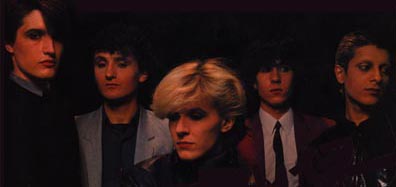
23/04/55 - Rob Dean (lead guitar, vocals) born 30/11/57 - Richard Barbieri (keyboards) born 23/02/58 - David Batt (David Sylvian, lead vocals, guitar, keyboards) born 24/07/58 - Anthony Michelides (Mick Karn, bass guitar, saxophone, vocals) born 01/12/59 - Steve Batt (Steve Jansen, drums) born
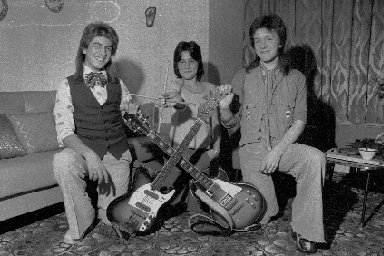
In September 1969 David Batt started at Catford Secondary School and was placed in the same class as Anthony Michelides and Richard Barbieri. Richard sat at the front of the class and was hardworking; Anthony (or Mick as he was known to classmates) was the class clown and David was the quiet loner sitting at the back. David and Mick soon became friends. Mick calmed down a bit and David gained more confidence through their friendship. David introduced Mick to his brother Steve, who was a couple of years below them in school. David and Steve's father was a builder, his mother a housewife. They also had an older sister, Linda. David inherited his looks from their mother, whereas Steve took after their dad. Music and Science Fiction were their main interests (Mick's assumed surname of Karn may have been inspired by a Dr Who story "The Brain of Morbius" featuring the very glamorous "Sisterhood Of Karn"). As David and Steve's sister was a few years older, they grew up listening to her favourite Tamla Motown and other black artists such as Smokey Robinson, Marvin Gaye and The Jacksopn Five. Later, they discovered Bowie, Velvet Underground, New York Dolls and Roxy Music. David also became fascinated with Andy Warhol and the whole New York pre-punk scene. It is interesting that in 1975, Japan went to see Roxy play live, and the support group was the Sadistic Mika Band, featuring their future friend Yukihiro Takahashi on drums. Richard Barbieri, though sharing their interest in Bowie and Roxy, was also a fan of hard and progressive rock such as Hawkwind, Led Zeppelin and ELO. He also had a big interest in football and tennis, and at the time had his own group of friends outside school. The idea of forming a band came up between David, Steve and Mick as something to do outside of school hours, as they did not have the interest in sports that Rich had. Christmas 1973, David and Steve got a guitar and small drum kit as presents. Mick was to be the lead vocalist, but he also had other musical commitments:
David also had a hard time at school.
David, Steve and Mick's first concert was at Mick's brother's wedding. Minutes before they were due to go on, an attack of nerves on Mick's part led to a reluctant David taking on lead vocal duties.
The rehearsals took place initially at David and Steve's house, but after a few months they were allowed to use a room above Mick's dad's butchers shop. The way the band worked was that David wrote most songs at home, in private, on accoustic guitar. Then at rehearsal he would play his songs to the other two and they would work on the arrangements together. This method of working remained in place until the time of "Quiet Life", when more of the work was composed on piano, or totally in the studio. After 18 months of rehearsals, the group knew they needed more members to achieve the kind of sound they wanted. They decided to place an advertisement in Melody Maker magazine. The best guy who responded was 22 year old Rob Dean, who with his great technique took on lead guitar duties. At this time (late 1975) on a train journey the group bumped into old school friend Richard Barbieri (at the time working for Barclays Bank) and asked him to play keyboards. In the group's early days a common story was that Richard was told to go away and practice for 6 months before he could join! In reality, after a couple of months rehearsals their first performance together was in London on Valentines Day 1976 supporting The Fabulous Poodles.
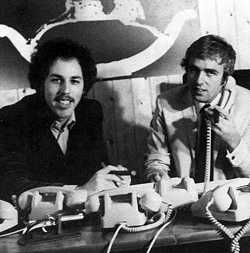
Steve's favourite drummer was Yukihiro Takahashi, then in the Sadistic Mika Band, who Japan had seen live in concert. Steve says about Yukihiro: "I've always admired him since the Sadistic Mika Band, years ago, and he struck me then as a really good drummer. Then when I heard he'd worked with Y.M.O. I was convinced. He has influenced me - he's about the only influence I can pick out. I don't know if he knows it - he probably does!" (from an interview with Betty Page) Throughout 1976 the band practiced hard and then began to look for more live engagements. Later on in the year they arranged a 2 week residency at a club called The Big End in Munich, Germany themselves, but before they could go there was a major development: they were introduced to their future manager, Simon Napier-Bell. Japan were introduced to Simon by Danny Morgan, who was serving a kind of apprenticeship in rock management with the more experienced businessman. Simon Napier-Bell was a very well known face in the rock industry, having managed or discovered acts such as Marc Bolan and The Yardbirds, plus he had worked with Dusty Springfield. In the early 70's he had become disenchanted with managing bands and he produced a few albums with Ray Singer before taking some time off to travel the world and have fun. When he returned to London in 1976 the music business had changed and he took on Danny Morgan basically as a talent scout. Morgan discovered Urchin (who became Iron Maiden) and Japan. He arranged an audition for the group, but initially the manager was only interested in signing David:
David was offered a solo deal, but he did not want to go it alone and Napier-Bell eventually signed them as a group. So, with Simon as their manager, Japan were in a position to look for a record deal. However, they decided to go ahead with the trip to Munich, despite advice that it would be a bad move and something they just didn't need to do.
After the trip to Munich, which involved a stay in a cockroach infested hotel room, Napier-Bell got to work selling Japan to the record companies. He was out of luck. The punk boom had changed the way record companies were looking at bands. Japan went against the grain. While scouting for business, Napier-Bell gained Japan some live experience by securing them on tour slots with The Damned and Jim Capaldi. He also bought new equipment and paid them living expenses. After running up debts with Napier-Bell Japan were lucky to gain a contract with German company Ariola-Hansa. At the time, Hansa had come to the UK and were looking for fresh talent by means of a competition (there was a large advert with an impressive looking woman astride a motorcycle, stating "Wanna be a recording star? Get your ass up! Take your chance!"). Japan auditioned for Hansa at Morgan Studios on Friday 13th May 1977. The winners of the contest were The Cure, but in true Gareth Gates style Japan were also signed just 3 days later (May 23rd 1977) and given £1000 to buy new instruments - which was part of the advertised prize, although it has been denied that they had anything to do with the competition. The following information may make things a little clearer - information courtesy of Robert Smith:
Then The Cure were put into the studio, and emerged with three classics - "Killing An Arab", "Boys Don't Cry" and "10.15 Saturday Night" - all of which Hansa refused to release and henceforth proceeded to drop the group (after attempts to get them to perform cover versions, hmm, sounds familiar doesn't it - read on). Just after that, Japan were given more attention. As with The Cure, Hansa funded studio time, and Japan, with an average age of 17, were allowed to develop their style. However, wanting to please their new manager, Hansa and themselves, they faced a difficult task finding the right direction. This is despite David's assertion that they had 100% artistic control, but he has since said that it was a case of him not being mature enough not to be persuaded in certain directions by other people. It is interesting to see that unlike The Cure, Japan were prepared to (or rather, were interested in) making more supposedly chart-friendly disco influenced material. A demo tape of this early Hansa material shows them attempting to do what Trevor Horn later succeeded doing with Frankie Goes To Hollywood - disco music mixed with rock guitars. By Autumn 1977 the group had amassed around 20 songs from which to pick material for their debut album, which was recorded with Simon Napier-Bell's partner Ray Singer Meanwhile, their manager and Hansa began to work out strategies to make them famous as quickly as possible. Simon Napier-Bell's initial strategy was to capitalize on one of Japan's songs, "Adolescent Sex", which could really be called "Whatever Gets You Through The Night", but the more controversial title would get them more attention, it was thought. So, posters were made depicting a hand approaching a man's trouser zip, some with the catchy phrase "get into Japan" emblazoned across the top. Other, smaller versions were placed throughout the pages of the rock weeklies, with no text, to keep people curious. A TV advert was also produced, which allegedly shows David walking up some stairs with his back to the camera, then turning round, opening his jacket to reveal a pair of superimposed breasts! The second strategy was to capitalize on Japan's looks. With this in mind they soon began to appear in teenage magazines. This was all before the release of any records - and before David, Steve and Mick had changed their names. By early 1978 they became David Sylvian, Mick Karn and Steve Jansen, unfortunately leading to some nasty jokes in the press; Napier-Bell was seen as their mentor and he even began to think that it was his reputation that was causing them harm. However, Simon and the group became good friends and he went on to see them through all the good times as well. A famous publicity stunt from this era was to send Actor/Sumo wrestler Kendo Nagasaki in a cab around all the rock magazines armed with ample supplies of Rice Wine and copies of the album. This was publicly frowned upon by some journos, and Japan got a reputation for being party monsters as a result (well, briefly maybe). However, with Hansa's backing Japan also received more favourable coverage in the mainstream rock magazines in Germany and The Netherlands as well, building up a strong following. Finally, the Japanese press arrived, and Japan were just what they were looking for; Queen were the biggest foreign group in Japan and at the time of "Adolescent Sex" they had a lot in common, not least a glamorous rock image and a great guitar and synth sound. Japan were soon popular pin-ups, without a note of their music having been released. In March 1978, the single "Don't Rain On My Parade" and album "Adolescent Sex" were unleashed on the British public.
In April 1978 Japan went on tour with The Blue Oyster Cult, but were not well received by the fans of that band:
(Ironically, at the time the group had to choose between a tour of small venues supporting a then not well known band called Talking Heads and The Blue Oyster Cult...) Straight afterwards, the group went into the studio to record "Obscure Alternatives". This turned out to be quite a stressful time, with the group (particularly David) arguing with Ray Singer. It was at this point that the first near-split happened; the group felt disheartened by the poor press they were getting, they were not enjoying the album, and David particularly was feeling pressure (privately) to write material that would keep everyone happy.
"The Tenant" was produced by the group alone and it is the earliest indication of the direction that would lead to "Ghosts" and from there to "Brilliant Trees" and David's solo work. Another factor that encouraged the group at this time was the reaction of the Japanese fans. When "The Unconventional" single and Japan's debut album were released over there they were snapped up by an eager magazine-fuelled fan base. Ironically, what Japan were not satisfied with, an album mixing rock with electronics and disco, was quite cool sounding to the Japanese, at the time just beginning to appreciate Y.M.O., but not yet having ingested Punk to any great degree. One artist who recognised Japan early was Masami Tsuchiya (already in the music industry as Yamamoto Sho's guitarist). The fan mail started, and then for the next six months the group could hardly sneeze without it being captured on film by the likes of Watal Asanuma and his friends from the Japanese teen magazines.
Japan's one and only American tour took place in the Autumn of 1978. The US branch of Ariola were very pleased with "Obscure Alternatives" and rush-released it to capitalize on the visit (hence the US album's different track order).
Japan's first album had been slammed in the press, but a few more positive noises were being made by the time of the second album "Obscure Alternatives" in October 1978. Japan's first two albums also gained some popularity in Canada. Then came the European single "Adolescent Sex", which reached the top 30 in the Netherlands. The group planned to tour Australia and Japan in late 1978, but David had a throat problem (tonsillitis) that required an operation and recuperation. During this time David developed a more comfortable singing style, possibly not consciously, which became noticeable during the next spring's Japanese tour. Another reason that the group had to cancel the Australian and European tour dates was that Rob Dean broke a bone after getting his legs tangled in wires during a rehearsal. His leg was still in plaster when the group made a short film for the Japanese and European tours. Before they left for Japan, the group began to record demos for their next album, including "European Son", "Halloween" and another two (un-named) disco/electronic influenced numbers. During the Japanese tour, in March 1979, the group had introduced more synthesizers and dance beats into their set with "European Son":
After "Life In Tokyo" Japan played a couple of live dates in Europe, introducing "Halloween" to the live set, then recorded a new version of "European Son" and "All Tomorrows Parties" with Simon Napier-Bell at NOMIS before spending more time in the USA:
What David doesn't mention is that during the time in the USA the group went through some pretty dark times, nearly split up and even their manager was thinking of quitting, having invested a lot of time, energy and money with little return:
There was a temporary reprieve, however, (December 1979) with "Quiet Life" the single a big success in Japan and the album of the same name actually charting in the UK!
In the spring of 1980, Japan recruited saxophonist Jane Shorter to perform during the "Quiet Life" tour. John Punter helped create the group's live sound and toured with the group three years running. Despite some better press coverage and the steady sales in Japan, the rest of the world's record shops had unsold copies of "Quiet Life" rattling around the bargain bins.
However, when it came to the point when he had to tell Japan it was all over, Simon decided instead to stick with the group; they had become his friends. They agreed to work harder to break the singles market. With that in mind, the group recorded "I Second That Emotion" (March 1980) and made plans to gain more publicity in the British press:
It was not enough. Despite another successful Japanese tour Hansa decided not to finance another Japan album. Simon set about wheeling and dealing; A&M, CBS, EMI and Virgin all expressed an interest in Japan; the group eventually signed on the dotted line with Richard Brandson's company in June 1980, while Victor continued to represent the group in Japan. However, during 1980 the phenomenon of the New Romantics was in the headlines. Japan were seen as a major influence; tracks like "Life In Tokyo" and "Quiet Life" were popular in discos and it looked like Virgin would be able to crack the group in the UK. Hansa had second thoughts and tried to restrain the group through the courts. The legal costs were great but with the hope of greater success in mind, Simon generously wrote of the (allegedly) six figure sum that the band owed him. Japan were now able to record their next album, "Gentlemen Take Polaroids". "Polaroids" continued on from "Quiet Life" with John Punter once again at the controls. Sadly, the band were growing apart as fast as David was becoming more confident as a composer and arranger. Rob Dean and Mick Karn began to spend more time outside the group and David became more than ever the leader. A welcome break came when Ryuichi Sakamoto, who the band had met earlier in the year in Japan, popped in from across the corridor at Air Studios where he was recording his album "B-2 Unit". Ryuichi wrote "Taking Islands In Africa" in the studio and it was quickly added to the Japan album. Perhaps in an effort to encourage more group effort, Rich and Rob both contributed songs during the sessions, "The Experience of Swimming" and "Width of a Room", which were released on the "Gentlemen Take Polaroids" EP and can now be found on the American pressing of the CD album. The "Gentlemen Take Polaroids" EP crept into the lower reaches of the charts in the UK and the album became their biggest seller in Japan, remaining a fan favourite.
At the beginning of 1981, Japan appeared in the "Smash Hits" readers poll, a sure sign that success was just around the corner. They began to get some favourable press too; with younger bands looking up to them.
"Tin Drum" began, though, with a sad note as Rob Dean decided to leave the group. It had been a long time coming. He agreed to stay on for a Japanese and UK tour in Spring 1981, but did not play on "The Art Of Parties", which was Japan's biggest UK single up to that point. In the same week that single was released, Hansa began their re-issue campaign in earnest with "Life In Tokyo". This wasn't a great success, but the next single, a previously rejected version of "Quiet Life" hit the top 20. Suddenly, Japan were required to appear on Top Of The Pops - they had become teen sensations overnight, after four years! From this point on (summer 1981) Japan enjoyed a string of hit singles in the UK and European charts, alternating releases between Hansa and Virgin. The group, making the best of it, got involved with the Hansa releases to the extent of performing remixes (with "Tin Drum" producer Steve Nye) and designing the record sleeves. It has even been suggested that Mick re-recorded his bass part on "Life In Tokyo" for the "special remix" version that was a hit in the UK. Hansa next rushed out the compilation album "Assemblage", which was many fans first Japan album purchase. It was a great success of course - and meant that Japan had a high profile for the release of the proper new album, "Tin Drum" and the "Visions of China" single and tour.
For the "Visions of China" tour Japan employed the services of David Rhodes on guitar. He became a regular member of Peter Gabriel's band and has since played live with Mick at Princes Trust charity concerts. During 1981, Mick held sculpture exhibitions in London and Japan, plus the group got involved in a restaurant "The Penguin Cafe", for which the group made several ambient tracks as background music. "A Foreign Place" is probably one of those numbers. Japan being the band they were, decided to split up in 1982 just as they became seriously big with "Ghosts". The main reason was a personal conflict between David and Mick. Trouble had been brewing for some months. Simon and Virgin convinced them to stick it out, giving the group time to build up some financial security while giving them the freedom to pursue solo projects. In return they promoted the singles taken from "Tin Drum" and "Assemblage" (which gave Japan total 52-week chart coverage in 1982 - the only group to do so that year according to The Guinness Book of Records) and also agreed to tour again at the end of the year. (As a fairly new fan, 1982 seemed like a good year to me. All of the Hansa material was just as "new" to me as the Virgin material then and the way that the various members were getting a lot of press meant that they seemed to be always around, not in Japan or somewhere which was where they really were. It was saddening to hear of the plan to split, as a new album had been a continual suggestion for after the tour, particularly from David). The final Japan tour was their longest. They were joined by Masami Tsuchiya on guitar, keyboards and backing vocals. Their support band was Sandii & The Sunsetz and members of Y.M.O. made a special guest appearance at the Budokan concert. Japan disbanded on the 16th December 1982 after their final concert in Nagoya, Japan. For many fans though, this was not enough and they proved their loyalty by getting the posthumous live album, "Oil On Canvas" into the UK top 5. The members of Japan have continued to release albums, sometimes together, including "Rain Tree Crow" in 1991, which re-united David, Mick, Rich and Steve. More recently, Rob returned to the fold to work on the "Beginning To Melt" album on Medium, with Mick, Rich and Steve. The 1990's and years beyond have proved that together or apart, the members of Japan still make unique music, that recognises no boundary of convention, "taste", style or form. Take a listen to Japan's music; this is one group of people where you can't say you've heard it all before. |
| Don't rain on my parade: web design and content © 1996 -2008 Paul Rymer unless stated otherwise. All rights reserved. This is a fan appreciation site and is not affiliated to any of the record companies who have released material by Japan. It has not always been possible to establish who the copyright owner is for all of the material on this website. Please feel free to contact the webmaster with any questions. |